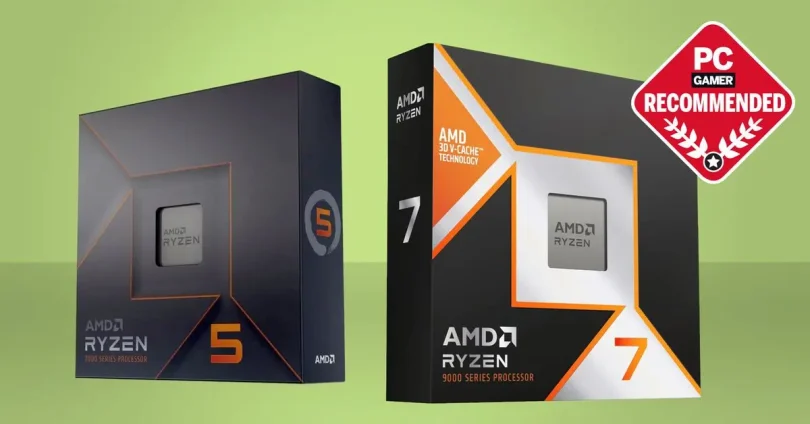

The processor, or CPU, is the brain of your computer, determining how fast and efficiently your system can run applications, handle multitasking, and perform demanding tasks like gaming, video editing, and AI processing. Choosing the right CPU is crucial because it directly impacts overall performance, system responsiveness, and future-proofing
In 2026, there are many options from Intel, AMD, and Apple, each offering different cores, clock speeds, and features. This guide will help you compare the top processors, understand their performance differences, and choose the best one for your gaming, productivity, or professional needs Top processor comparison
Top Processor Comparison of 2026
Here’s a breakdown of some of the leading processors you should consider in 2026, covering performance tiers from flagship powerhouses to excellent value options
AMD Ryzen 9 9950X3D
This chip stands out as one of the fastest consumer CPUs in 2026, featuring 16 cores and 32 threads with large 3D V‑Cache for improved gaming and productivity performance. It’s ideal for high‑end gaming, content creation, and heavy multitasking. Kfanhub
AMD Ryzen 7 9800X3D
A top choice for gamers, the Ryzen 7 9800X3D delivers exceptional gaming performance while still offering strong multitasking and productivity capabilities thanks to its advanced 3D V‑Cache design. 9meters
Intel Core i9‑14900K
Intel’s high‑end desktop CPU remains a powerhouse with plenty of cores and high clock speeds, excelling in both gaming and professional tasks. A good choice if you prefer Intel platforms with strong all‑around performance. Kfanhub
Intel Core i7‑14700K
A versatile processor with a hybrid core design, blending performance and efficiency cores for balanced performance in gaming, streaming, and productivity. It offers excellent value for high‑performance builds. 9meters
AMD Ryzen 5 9600X
This mid‑range performer delivers strong performance for 1080p and 1440p gaming as well as everyday productivity—ideal for value‑oriented builders. 9meters
Intel Core i5‑14600K
Intel’s Core i5 option is one of the best mid‑range CPUs for gaming and work, offering reliable multi‑core performance without a premium price tag. NEWS.am TECH – Innovations and science
Budget and Value Picks
Processors like the AMD Ryzen 5 7800X3D or older yet capable CPUs can still offer excellent performance for budget builds, making them solid choices if you want good performance without breaking the bank. Kfanhub
Upcoming 2026 CPUs to Watch
- AMD Zen 6 Processors (Ryzen 10000 series): Expected to launch in late 2026 with a new 2nm/3nm architecture, promising improvements in performance and efficiency for both desktops and workstations. Wikipedia+1
- Intel Panther Lake / Nova Lake: Next‑gen Intel Core Ultra processors aimed at laptops and desktops in 2026, featuring improved performance, integrated graphics, and AI capabilities. Wikipedia
These processors represent the top performance tiers, best value options, and emerging technologies you should consider in 2026. Next, we’ll break down how they differ in real‑world performance for gaming, productivity, and other use‑cases.
Performance Comparison
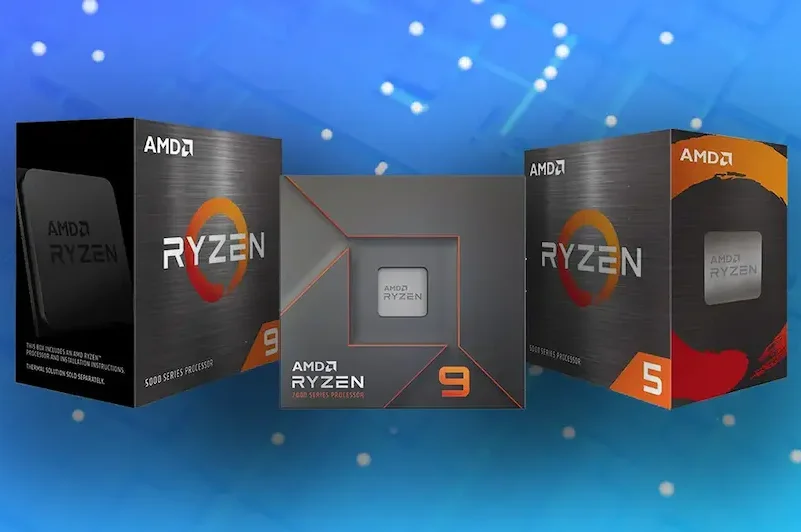
When comparing top processors, performance is the key factor that matters most for gaming, productivity, content creation, and everyday use. In 2026, CPUs from AMD and Intel lead the charts with varying strengths in single‑core, multi‑core, and real‑world workloads 9meters+1
Core Specs and Architecture Basics
Modern CPUs differ in core count, threads, base and boost clock speeds, and cache size. More cores and threads generally help with multitasking and productivity workloads, while higher clock speeds and larger caches often benefit gaming and single‑threaded tasks 9meters
Top Performers in Benchmarks
- AMD Ryzen 9 9950X3D: One of the most powerful CPUs in 2026, offering strong multi‑core performance and excellent gaming results thanks to its large 3D V‑Cache and 16 cores/32 threads 9meters+1
- AMD Ryzen 7 9800X3D: Often ranked as a top choice for gaming, this CPU delivers elite frame rates while still handling productivity tasks well 9meters
- Intel Core i7‑14700K: A versatile all‑around performer with a hybrid architecture that blends performance and efficiency cores, making it excellent for both gaming and workflows 9meters
- AMD Ryzen 5 9600X and Intel Core i5‑14600K: Mid‑range CPUs that provide great performance per dollar for 1080p/1440p gaming and everyday tasks 9meters
Single‑Threaded vs Multi‑Threaded Performance
- Intel CPUs historically excel in single‑threaded performance, which benefits tasks like gaming and light productivity, though the gap has narrowed with newer AMD processors Tom’s Hardware
- AMD’s strengths often shine in multi‑threaded workloads, where more cores and larger cache can boost performance for heavy tasks like video editing, 3D rendering, and simulation Tom’s Hardware
Real‑World Performance Differences
- Benchmarks show that CPUs like the Ryzen 9 9950X can match or exceed the performance of top Intel chips in many scenarios, especially in multi‑threaded tasks and gaming where cache plays a role Tom’s Hardware
- Intel’s high‑end processors still hold an edge in some productivity benchmarks thanks to higher boost clock speeds and strong single‑core performance, making them ideal for workflows that don’t scale well across many cores Tom’s Hardware
Efficiency and Thermals
Processor efficiency and heat output affect power consumption and cooling needs. Some high‑end CPUs deliver excellent performance but require robust cooling solutions, while others balance speed with lower power usage and quieter operation Kfanhub
Summary
- Best for Gaming: AMD Ryzen 7 9800X3D and Ryzen 9 9950X3D
- Best All‑Around Performance: Intel Core i7‑14700K
- Best Value Mid‑Range: AMD Ryzen 5 9600X and Intel Core i5‑14600K
- Matching your CPU choice to your use case ensures smooth gaming, efficient productivity, and future‑proof performance
you may also like to read these posts;
Smart Home Gadgets Review 2026: Top Devices for Convenience & Security
New Wearable Technology Trends 2026: Top Devices for Health & Productivity
Top Budget Gadgets for Students 2026: Affordable Tech for Study & Productivity
Innovative Gadget Reviews 2026: Top Smart Devices You Need to Know
Gadget Buying Guide 2026: How to Choose the Best Devices for Your Needs
Power Efficiency and Thermal Performance
When selecting a CPU, raw performance isn’t the only factor to consider. Power consumption and thermal management play a huge role in system stability, efficiency, and long-term reliability. Modern processors are engineered to strike a balance between high performance and energy efficiency, but differences exist across brands, architectures, and performance tiers
Thermal Design Power (TDP)
- TDP indicates the amount of heat a CPU generates under typical workloads, guiding your cooling solution choice
- High-end CPUs such as AMD Ryzen 9 9950X3D and Intel Core i9‑14900K have higher TDP values, meaning they require robust cooling to maintain peak performance without thermal throttling
- Mid-range CPUs like AMD Ryzen 5 9600X or Intel Core i5‑14600K have lower TDPs, making them energy-efficient and suitable for standard air-cooling setups
- TDP is not a strict measure of power draw, but it helps in planning PSU capacity and cooling requirements
Cooling Solutions
- Air Cooling: Affordable, reliable, and sufficient for mid-range CPUs; high-end chips may need premium heatsinks
- Liquid Cooling: Excellent heat dissipation for high-performance CPUs, ideal for overclocking or sustained heavy workloads
- Hybrid Cooling Solutions: Combine air and liquid cooling to handle extreme performance demands, often used in enthusiast builds or compact cases with limited airflow
Energy Efficiency
- AMD Zen 5 and Zen 6 CPUs are engineered for high performance per watt, delivering excellent multi-core performance without excessive power draw
- Intel Core Ultra processors (14th/15th gen) use hybrid architectures to optimize power usage—performance cores handle heavy workloads, while efficiency cores manage light tasks, lowering energy consumption
- Efficiency also reduces electricity costs and minimizes heat output, which is especially important in small form factor PCs and laptops
Thermal Performance in Real-World Usage
- High-end CPUs can reach 80–95°C under heavy load without advanced cooling Top Processor Comparisonsbx
- Efficient CPUs often maintain 60–75°C under typical workloads, avoiding throttling and extending CPU lifespan
- Case airflow, quality thermal paste, and temperature monitoring software are key to maintaining stable performance over time Top Processor Comparison
Noise and Comfort
- Powerful cooling solutions, especially liquid coolers, can reduce fan noise even under load
- Efficient mid-range CPUs often stay quiet with standard air cooling, making them ideal for home offices and casual gaming setups Top Processor Comparison
Why Power and Thermal Management Matters
- Prevents thermal throttling, which reduces performance when the CPU gets too hot Top Processor Comparison
- Extends the lifespan of your CPU and other components Top Processor Comparison
- Helps in building energy-efficient PCs, reducing electricity usage without sacrificing performance Top Processor Comparison
- Ensures stable performance in high-demand tasks like rendering, gaming, and AI workloads Top Processor Comparison
Summary
- High-End CPUs: Ryzen 9 9950X3D, Intel Core i9‑14900K – peak performance but higher power draw and cooling needs
- Mid-Range CPUs: Ryzen 5 9600X, Intel Core i5‑14600K – efficient, easier to cool, ideal for 1080p/1440p gaming and general productivity Top Processor Comparison
- Proper CPU selection includes considering power efficiency, cooling solutions, and system airflow alongside raw performance to build a reliable, future-proof PC Top Processor Comparison
Integrated Graphics vs Dedicated GPUs
When choosing a CPU, it’s important to consider whether it comes with integrated graphics (iGPU) or if you’ll pair it with a dedicated GPU. This choice impacts gaming performance, productivity tasks, and overall system cost
Integrated Graphics (iGPU)
- Built directly into the CPU, no separate graphics card is required Top Processor Comparison
- Suitable for everyday tasks, light gaming, video playback, and office work Top Processor Comparison
- AMD Ryzen G-series and Intel Core processors with “F” suffix excluded often include capable integrated graphics
- Pros:
- Cost-effective (no need to buy a GPU) Top Processor Comparison
- Lower power consumption Top Processor Comparison
- Saves space in compact builds Top Processor Comparison
- Cons:
- Limited performance for modern AAA gaming or 3D rendering Top Processor Comparison
- Not ideal for AI workloads or GPU-accelerated applications Top Processor Comparison
Dedicated GPUs
- Separate graphics card installed in the PCIe slot Top Processor Comparison
- Required for high-end gaming, 4K content creation, VR, and AI tasks
- Examples: NVIDIA RTX series, AMD Radeon RX series, Intel Arc GPUs
- Pros:
- Superior gaming and rendering performance
- Supports ray tracing, AI acceleration, and high-resolution workflows
- Upgradable independently of the CPU Top Processor Comparison
- Cons:
- Adds cost to the build
- Higher power consumption and heat output
Which Should You Choose?
- Integrated Graphics: Best for casual users, office PCs, budget builds, or small form-factor systems
- Dedicated GPU: Necessary for gamers, content creators, and professionals using GPU-accelerated software
- Hybrid Approach: Some CPUs with strong iGPUs can handle light gaming and casual workloads, while leaving room to upgrade to a dedicated GPU later
Summary
- Casual/Office Use: CPU with integrated graphics (Intel UHD Graphics, AMD Vega iGPU)
- Gaming/High-End Workloads: CPU paired with a dedicated GPU
- Future-Proofing: Dedicated GPU builds allow upgrades without changing the CPU
Which CPU is the fastest in 2026?
The AMD Ryzen 9 9950X3D and Intel Core i9‑14900K are among the top performers, excelling in both gaming and productivity tasks
Do I need a high-end CPU for 1080p gaming?
No. Mid-range CPUs like AMD Ryzen 5 9600X or Intel Core i5‑14600K provide excellent performance for 1080p or 1440p gaming, keeping frame rates smooth without overspending.
AMD vs Intel – which should I choose?
AMD: Great for multi-core workloads, productivity, and gaming thanks to high core counts and large cache.
Intel: Strong in single-core performance, making it ideal for gaming and lightly threaded tasks.
Apple Silicon (M3/M4): Excellent for Mac users, combining efficiency with strong performance in creative applications.
Conclusion
Choosing the right processor in 2026 depends on your needs, budget, and use case. High-end CPUs like the AMD Ryzen 9 9950X3D and Intel Core i9‑14900K deliver top-tier performance for gaming, content creation, AI workloads, and heavy multitasking, making them ideal for enthusiasts and professionals. Mid-range CPUs such as the Ryzen 5 9600X and Intel Core i5‑14600K offer excellent value, handling 1080p/1440p gaming and everyday productivity smoothly, while remaining energy-efficient and easier to cool
When comparing CPUs, consider performance, core count, clock speed, thermal efficiency, and integrated vs dedicated graphics. Matching your CPU to your usage requirements and budget ensures you get the best performance without overspending. With the right choice, you can enjoy a future-proof, fast, and reliable PC that meets all your gaming and productivity needs